Gentle solar panel cleaning for coastal homes in California
Salt film, dust and bird spots rinsed off your panels with pure water and soft brushes, across the South Bay of San Diego County and nearby communities.
Purified waterDries clear, no soap film or mineral spots
Soft brushes onlyNever a pressure washer on the glass
Early, cool morningsWeekdays from 7:30, Saturdays from 8:00
Clear glass, the gentle way
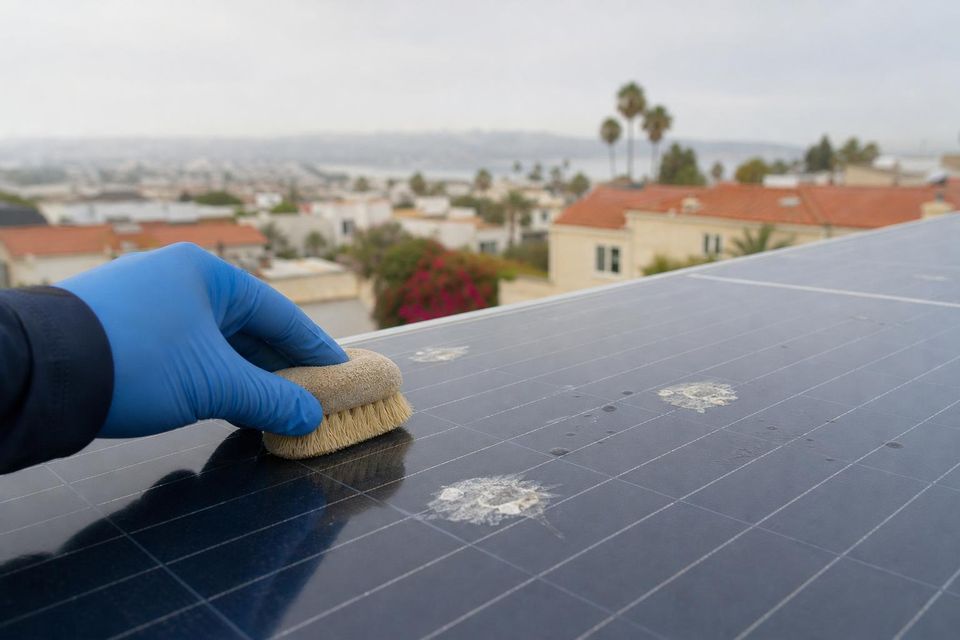
Living near the ocean is wonderful for people and a little hard on solar panels. Every morning the marine layer brings a fine mist of salt over the rooftops of the South Bay. By noon the mist has dried and the salt has stayed. Add street dust, spring pollen and a few passing gulls, and dark, glossy panels slowly turn gray and dull.
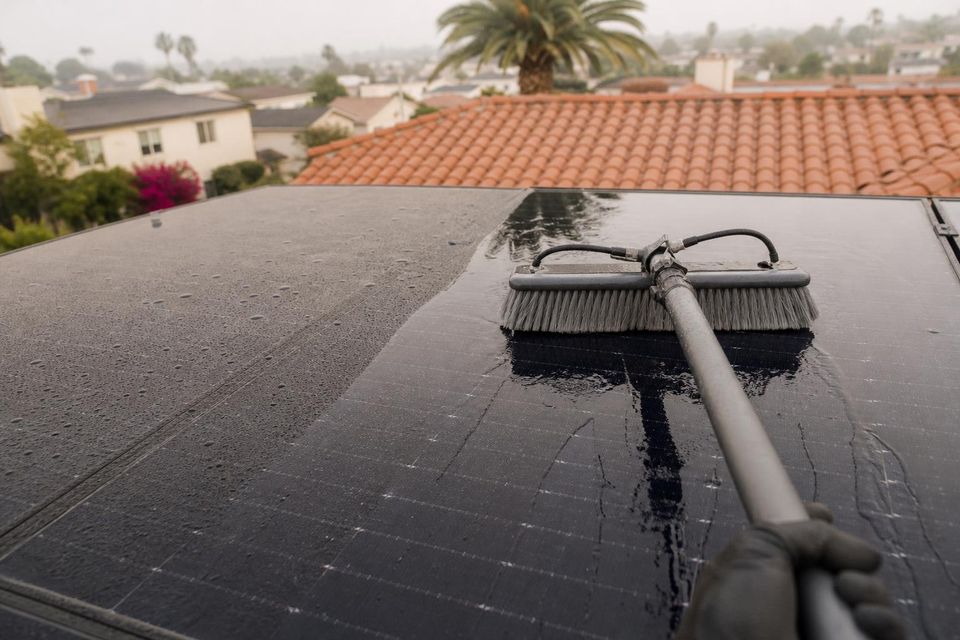
Chuy's Solar Cleaning washes that film away without harsh chemicals and without force. We use purified water, so nothing dries back into spots, and soft brushes on a water-fed pole that reach across the array from a safe footing. Clean glass simply lets more sunlight reach the cells, and it looks the way it did when the panels first went up.
Salt and sun: what settles on your panels
Slide from the shoreline toward the hills. The picture, the films and the usual cleaning rhythm change with the distance from the ocean.
Within half a mile of the water
On the shore
Salt film
Very heavy
Dust
Light
Pollen
Light
Usual rhythmEvery 3 to 4 months
Fine salt mist drifts in with the sea breeze and the morning marine layer keeps it damp. It dries into a dull white haze that a light rain rarely shifts, so homes close to the water usually plan the most visits.
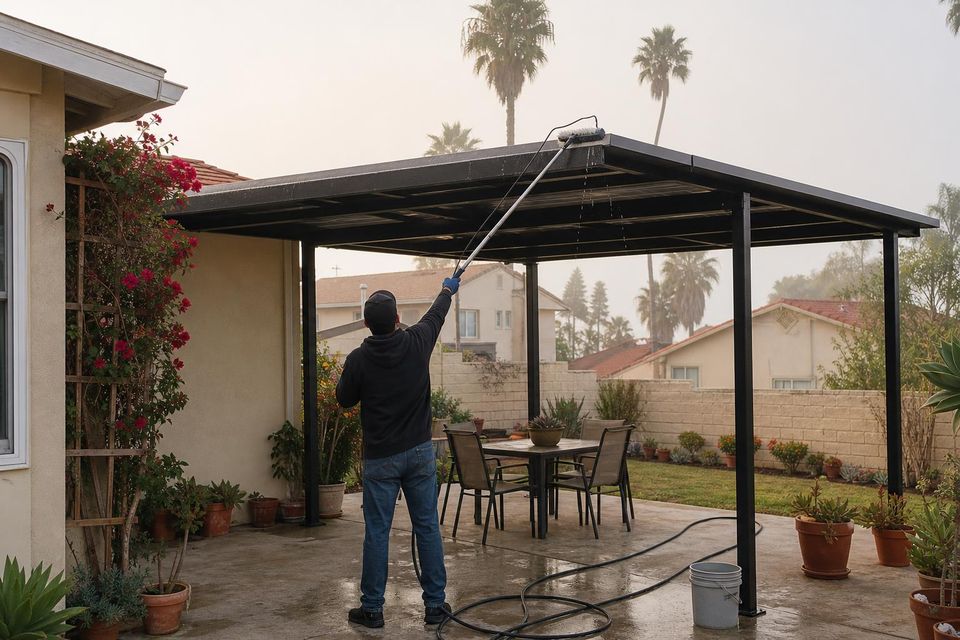
Rooftop arrays, patio covers and carports, quick spot visits for droppings and pollen, and a seasonal rhythm for homes that want it handled. Compare all services
Most visits follow the same calm pattern. You do not need to be home, as long as we can reach the side yard and an outdoor spigot.
1
Early start
We arrive in the cool morning hours, while the glass is cold and the marine layer still hangs over the roofs.
2
A careful look
From the yard and the ladder we check footing, roof type and where the film is heaviest before any water runs.
3
Soft wash
Purified water through a water-fed pole and a soft brush, panel by panel, with spot work on droppings.
4
Clear rinse and photos
A slow final rinse so the glass dries clear, then before and after photos sent to you the same day.
Why coastal panels need a softer touch
Salt holds moisture, so a salty panel stays damp longer and collects dust faster. Morning dew gathers both and dries into small rings along the lower edge of each panel. Tap water and a strong hose jet only add their own spots.
That is why we rinse with purified water, work while the glass is cool and give stubborn spots time to soften instead of scrubbing. Our coastal care guide explains each film and what you can safely do from the ground between visits.
We clean panels for homes in the South Bay of San Diego County and nearby communities: stucco houses with red clay tile roofs, ranch homes with shingle roofs, newer homes with low-slope roofs, and backyards with solar patio covers or carports.
Each street has its own mix. Homes close to the water collect salt film the fastest. Homes on the mesas see more dust, and homes toward the hills get the most spring pollen. We plan every visit around that, and we tell you which rhythm makes sense for your home rather than selling you more visits than you need.
Send your ZIP code with the form or call during office hours, and we will confirm that your street is on our route.
Cookies. Necessary cookies keep the site working. Analytics and advertising cookies run only if you allow them. Cookie Policy
Cookie Settings
Choose which optional cookies this site may use. Your choice is kept for 180 days. A Global Privacy Control signal from your browser is treated as a rejection of optional cookies.
Strictly necessaryAlways on
Keep the site working and secure and remember your cookie choice.
Help us see which pages are used. Off unless you turn it on.
Measure whether an ad led to a cleaning request. Off unless you turn it on.
Your browser sends a Global Privacy Control signal, so optional cookies stay off.